

AV Fistula vs. AV Graft: Which Dialysis Access Is Right for You?
Understanding Your Dialysis Access Options
If you’ve been diagnosed with end-stage renal disease (ESRD) and need hemodialysis, one of the first decisions you and your medical team will make is how to create a reliable access point for your dialysis treatments. The two most common long-term options are an arteriovenous (AV) fistula and an arteriovenous (AV) graft.
Both serve the same purpose — providing a high-flow connection that allows the dialysis machine to efficiently filter your blood. But they differ in how they’re created, how long they last, and what risks they carry. Here’s what you need to know.
What Is an AV Fistula?
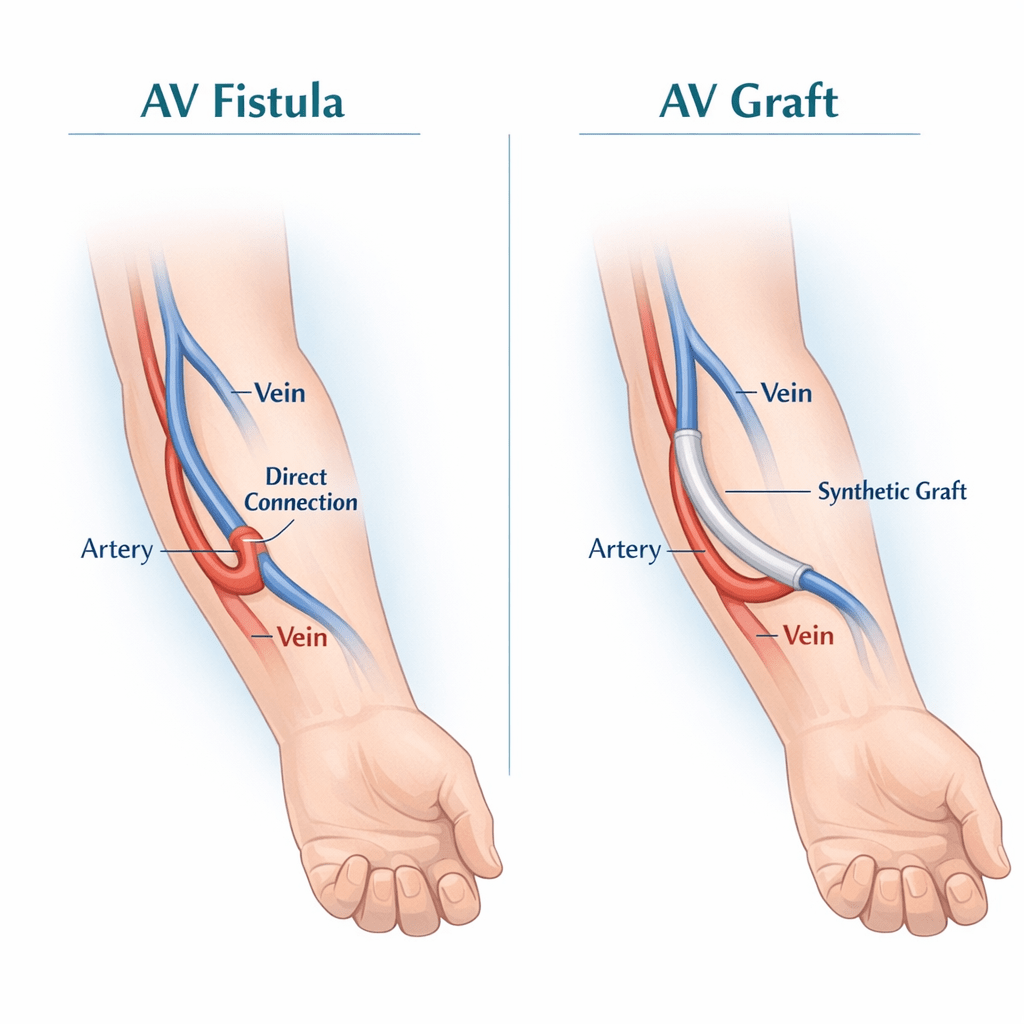
An AV fistula is created by surgically connecting one of your own arteries directly to a nearby vein, usually in the forearm. This direct connection causes blood to flow from the high-pressure artery into the vein, which causes the vein to enlarge and its walls to thicken over time — a process called maturation.
Once mature, the enlarged vein can handle the repeated needle insertions required for dialysis and supports the high blood flow rates needed for effective treatment. Maturation typically takes several weeks to a few months, which is why fistula creation is ideally planned well before dialysis begins.
Benefits of an AV Fistula
The AV fistula is widely considered the gold standard for dialysis access. It tends to last longer than other access types — often functioning well for years or even decades. Because it uses your own blood vessels rather than synthetic materials, the risk of infection is significantly lower. Fistulas are also less prone to clotting and generally require fewer interventions to maintain.
The procedure itself is performed as an outpatient surgery under local anesthesia, and most patients return to daily activities quickly.
What Is an AV Graft?
An AV graft uses a small tube of synthetic material — typically a biocompatible plastic — to connect an artery to a vein. The graft acts as a bridge between the two blood vessels and provides the access point for dialysis needles.
Grafts are often used when a patient’s veins are too small, too damaged, or otherwise unsuitable for a direct fistula connection. They can also be placed in locations where fistula creation isn’t feasible.
Benefits of an AV Graft
The primary advantage of a graft is that it matures faster — often usable within two to three weeks, compared to the months a fistula may need. For patients who need to start dialysis soon and don’t have time to wait for fistula maturation, a graft can be a practical solution.
Grafts also offer more flexibility in placement, which can be helpful for patients who have had previous access procedures or have limited suitable veins.
How Do They Compare?
In general, fistulas are preferred because of their longevity and lower complication rates. However, not every patient is a candidate for a fistula. Factors like vein size, vein quality, previous surgeries, and how soon dialysis needs to begin all play a role in the decision.
Grafts are a reliable alternative when a fistula isn’t possible, and with proper monitoring and maintenance, they can serve patients well for years. Both types of access may occasionally need interventional procedures — such as angioplasty or thrombectomy — to maintain proper blood flow.
The Importance of Vein Mapping
Before any access is created, your vascular specialist will perform a vein mapping study — typically an ultrasound exam — to evaluate the size, depth, and quality of the arteries and veins in your arms. This assessment determines whether you’re a good candidate for a fistula or whether a graft would be the better option.
Early planning is critical. If you know you may need dialysis in the future, ask your nephrologist about a referral for vein mapping sooner rather than later. Creating a fistula well in advance gives it time to mature before your first dialysis session.
Dialysis Access at B&B Medical Group
At B&B Medical Group in Bellflower, our vascular surgeons specialize in both AV fistula creation and graft placement. We also provide comprehensive dialysis access management — including angioplasty, thrombectomy, and stent procedures — to keep your access functioning properly over the long term.
If you or your doctor are considering dialysis access options, contact us to schedule a consultation or call (562) 888-8961.
