

Outpatient Angioplasty and Stenting for PAD: Faster Recovery, Better Outcomes
Restoring Blood Flow Without Major Surgery
For patients with Peripheral Artery Disease, the core problem is straightforward: narrowed or blocked arteries are starving the legs and feet of the blood flow they need. The symptoms — leg pain, non-healing wounds, cold feet, cramping — are all downstream effects of that reduced circulation.
Angioplasty and stenting are two of the most effective minimally invasive procedures for restoring blood flow in PAD patients. At B&B Medical Group, these procedures are performed as outpatient surgeries — meaning you go home the same day, without a hospital stay.
How Angioplasty Works
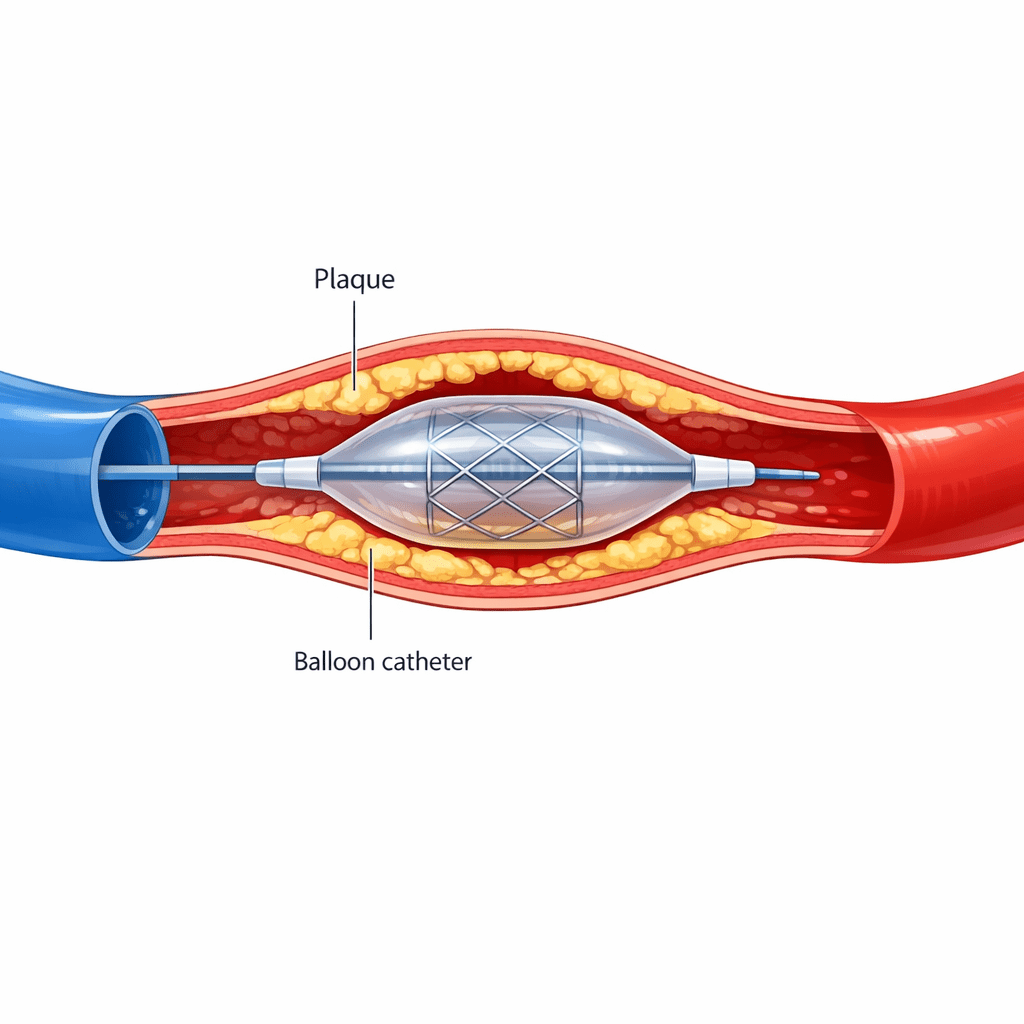
During an angioplasty, the vascular specialist inserts a thin, flexible tube called a catheter through a small puncture — typically in the groin area. Using real-time imaging (fluoroscopy), the catheter is guided to the narrowed section of the artery.
Once in position, a tiny balloon at the tip of the catheter is inflated. This balloon pushes the plaque against the artery walls and widens the opening, restoring blood flow. The balloon is then deflated and removed. The entire procedure is performed under local anesthesia, and most patients are awake throughout.
When a Stent Is Needed
In some cases, the artery may need additional support to stay open after angioplasty. This is where a stent comes in — a small, expandable wire mesh tube that is placed inside the artery at the treatment site. The stent acts as a scaffold, holding the artery open and preventing it from narrowing again.
The decision to place a stent depends on factors like the location and severity of the blockage, the condition of the artery wall, and the likelihood of the artery re-narrowing. Your vascular specialist makes this determination during the procedure based on real-time imaging.
The Outpatient Advantage
Performing these procedures in an outpatient surgical center rather than a hospital offers several advantages for patients. The setting is typically quieter and less overwhelming than a hospital environment. Scheduling is faster — often within the same week of referral. Recovery time is shorter, with most patients walking within hours and returning to normal activities within a day or two. And infection risk is lower in a dedicated outpatient facility compared to a busy hospital setting.
What Recovery Looks Like
After the procedure, you’ll be monitored for a few hours at our center before being discharged. You’ll receive specific instructions about activity restrictions (usually light activity for 24-48 hours), medication management, and signs to watch for. Most patients report significant improvement in their symptoms within days of the procedure.
Follow-up appointments are scheduled to monitor your progress and ensure the treated arteries remain open. In some cases, additional lifestyle changes — including a structured walking program and medication adjustments — are recommended to support long-term results.
For Referring Providers
If you have patients with symptomatic PAD who may benefit from angioplasty or stenting, we welcome your referrals. Our team coordinates closely with referring physicians, providing procedure reports and follow-up summaries. Visit our referral page to submit a scheduling form or call (562) 888-8961.
Schedule Your Evaluation
If you’ve been diagnosed with PAD or are experiencing symptoms like leg pain, non-healing wounds, or cold feet, an evaluation can determine whether angioplasty or stenting could help. Book an appointment at B&B Medical Group in Bellflower today.
